AI engineering power, built for marketing teams
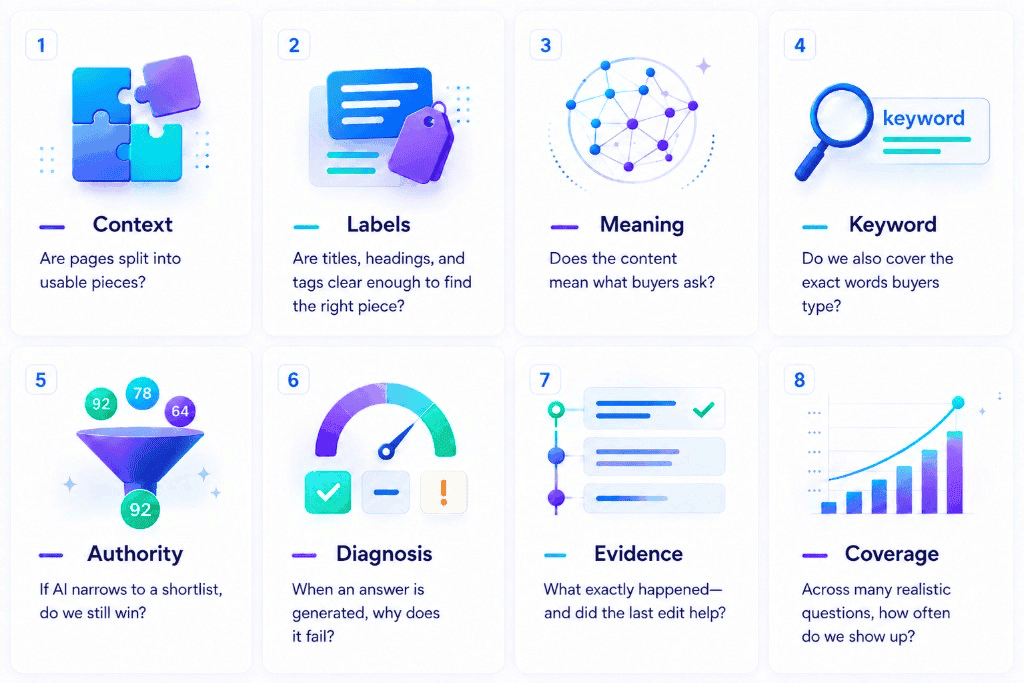
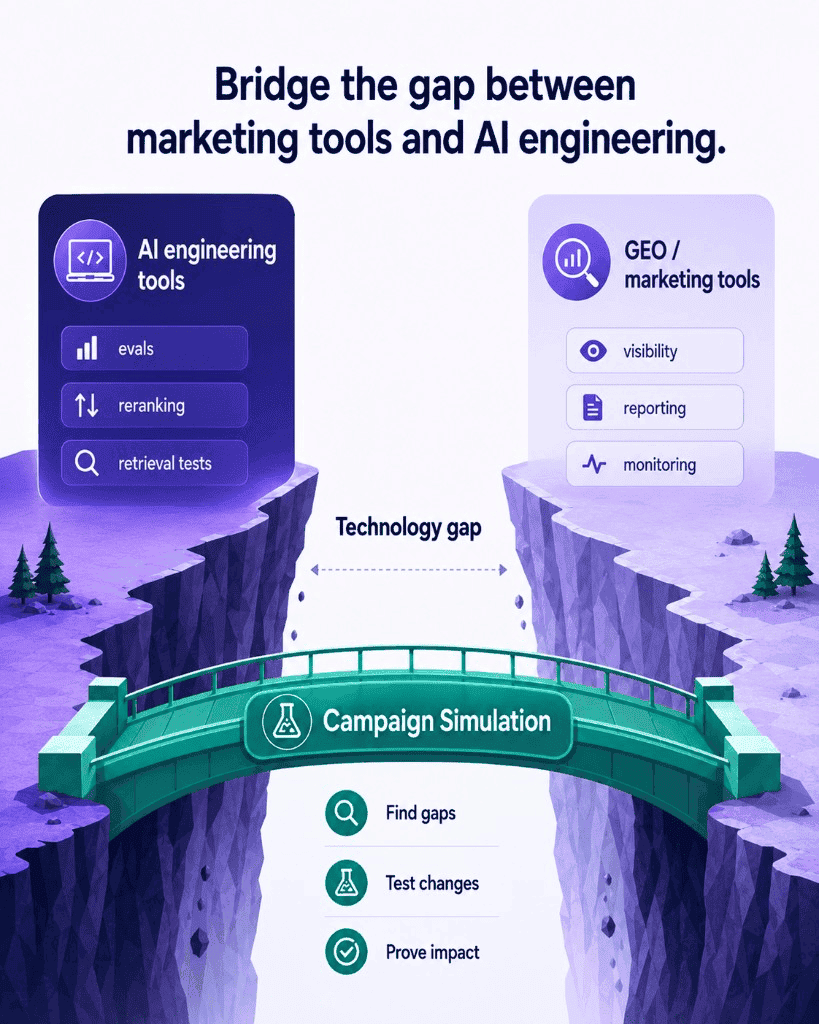
AI engineers have better tools for optimizing AI search. Until now, marketers haven't. Oppkey brings engineering-grade content testing to marketing teams, using eight characteristics that influence how AI systems like ChatGPT, Gemini, and Claude work.
How Oppvera works
Oppvera tests your owned content through diagnostic lenses that simulate how modern AI systems find, shortlist, and use passages. It does not claim to know ChatGPT's ranking algorithm. Instead, it shows where content may be weak before a campaign launches, or when a client asks why they are missing from AI answers.
Start with the problem you see:
- Context & Labels - Structure content so AI can identify and use it
- Meaning & Keyword - Match the questions and language buyers actually use
- Relevance - Strengthen content that gets found but falls out of the shortlist
- Diagnosis - Investigate answers that are thin, off-topic, or unsupported
- Coverage - See how performance extends across the broader category
- Compare - Measure whether campaign changes improved results
You do not need to start at step one. Use the diagnostic that matches the problem.
The content path
8 steps AI takes before answering a question
Think of each step as a checkpoint - not a separate product. When a buyer asks an AI a question, your pages are split, labeled, searched by meaning and exact wording, narrowed to a shortlist, turned into an answer, and checked again after you edit. Oppkey translates those stages into plain questions your team can act on.